Grow Kits Blog, Grow Tent

Best Dehumidifier for Grow Tent & Small Grow Room

Best Dehumidifier for Grow Tent

A high level of humidity in your grow tent can lead to mold, mildew, and other issues that severely affect your yield. That’s why we often receive inquiries about a dehumidifier specifically designed for the grow tent. After months of thorough research and preparation, here it is, a dehumidifier for grow tent. Whether it's a small 2x2 tent or a larger 5x5 setup, we’ve got you covered. 

In this guide, we'll explore the best dehumidifier for grow tent, specifically designed to keep your grow environment optimal moisture, ensuring your green plants thrive.

Table of Contents

Why Do I Need a Dehumidifier for a Grow Tent?

We both know the role of a dehumidifier in daily life, but when it comes to grow tents or small grow rooms, is it necessary to use a dehumidifier? In the wintertime of Europe, countries such as Germany, France, and Spain tend to have a much higher humidity than in summer. If you do nothing about the 80% or even 90% humidity level when the crops begin to flower, chances are the plants will end up getting moldy and bud rot. This situation harms the plants and impairs yields. By using a dehumidifier for a grow tent, you are allowed to control the humidity level to make it perfect for healthy plant development, even in moist times. 
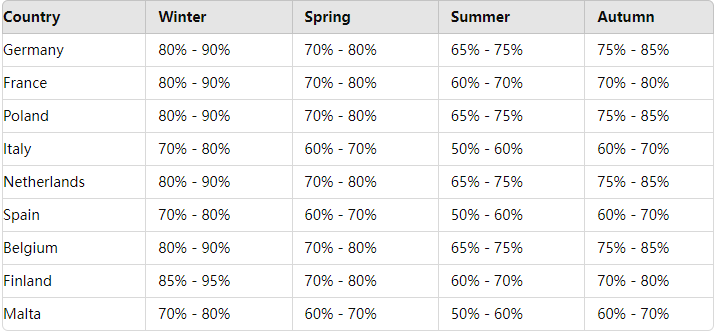
EU Humidity Levels by Season

EU Humidity Levels by Season

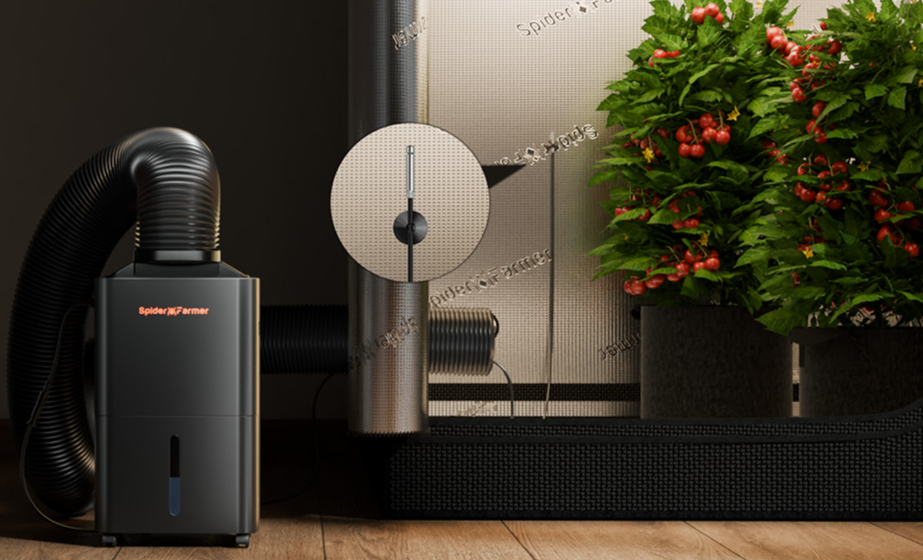
Additionally, unlike ordinary household dehumidifiers, Spider Farmer dehumidifiers come with one serious feature tailored for grow tents, which is a specially designed air duct that connects the dehumidifier to the tent. 
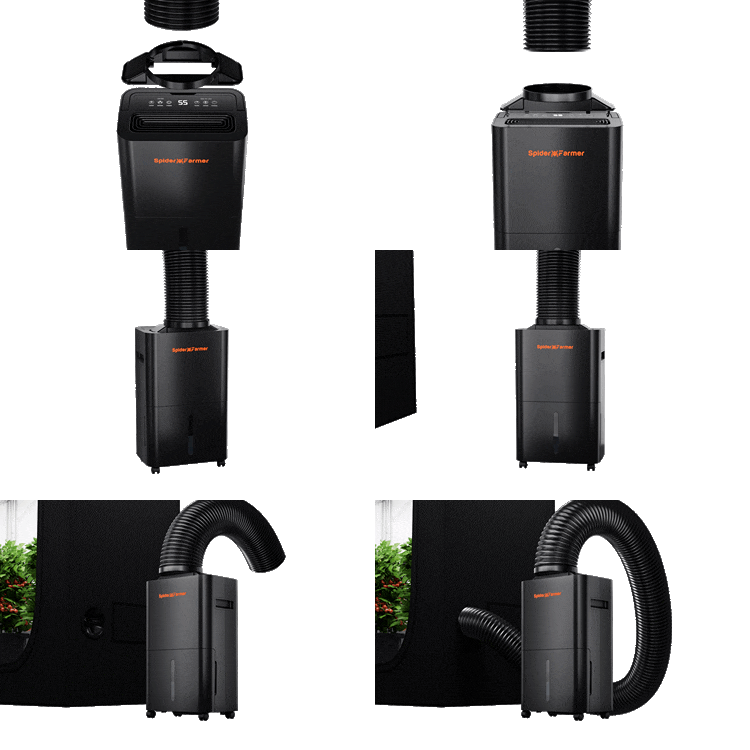
Spider Farmer Dehumidifier for Grow Tent

This air duct makes it possible to place the dehumidifier outside of the tent. Why outside? It ensures that the heat generated when the dehumidifier works does not mess with the grow tent temp. Also, you don’t have to worry about the screen light of the dehumidifier disturbs your plant's light cycle. Last, every space in the grow room counts, and you sure don’t want the dehumidifier to take that up. 

Now you know why using a dehumidifier for grow tent, the next question is, what size should you opt for? 

What Size Dehumidifier Is Needed for My Grow Room

Dehumidifiers are sized by pint. Choosing the right size of dehumidifier depends on how much water you use on plants and the size of your grow tent. Here's how to figure out the right size of the dehumidifier for your grow tent. 

Step 1: Calculate Total Water Usage

For example, if you have 6 plants in a 4x4 grow tent and water them with 1 gallon each every 2 days, the total water usage is:

6 plants * 1 gallon/plant = 6 gallons

Since 1 gallon equals 8 pints, 6 gallons means 48 pints of water. 

Step 2: Determine Daily Dehumidification Need

Divide by the number of days: 48 pints / 2 days = 24 pints/day.

That’s it! You’ll need at least a 24-pint dehumidifier for your grow tent. Under some extreme conditions, say, the temp and humidity are going too high or too low, this required size can fluctuate a bit. 

For example, in a grow tent with low temp & humidity levels, you can reduce the size by 15%, which results in 20.4 pints/day of dehumidification. On the contrary, high temp & humidity levels require 15% more, which means you’ll need a dehumidifier with at least 27.6 pints. 

If you have trouble finding out the right size of the dehumidifier, leave a comment and we’d like to sort that out! 

Feature

Compressor Dehumidifier

Semiconductor

Dehumidification Capacity

39x

1x

Energy Efficiency Ratio

4x

1x

Winter Compatibility

Yes

No

Noise Levels

Low

High

Spider Farmer 32 Pint Compressor Dehumidifier [Suitable for 2x2 to 5x5 Grow Tent]

Here we are, the star of today - Spider Farmer 32 Pint Dehumidifier for Grow Tent, the best solution for maintaining optimal humidity levels in grow tents of various sizes. What makes it the best dehumidifier for a grow tent in the current market? Let’s walk through this product one by one. 

Buy Compressor Dehumidifier, Not Semiconductor Dehumidifier

There are two major types of dehumidifiers in the market - compressor dehumidifiers and semiconductor dehumidifiers. We are proud to say that Spider Farmer is using advanced compressor technology. Why? Here’s a quick overview of why choosing a compressor dehumidifier over a semiconductor.

By using the Spider Farmer compressor dehumidifier for your grow tent, you get to enjoy:

Superior Dehumidification Capacity: A compressor dehumidifier has 39 times the dehumidification capacity of a semiconductor one. This means it can remove moisture from the air much more efficiently, ensuring your grow tent stays at the optimal humidity level.

Exceptional Energy Efficiency: With an energy efficiency ratio 4 times higher than that of a semiconductor dehumidifier, the compressor dehumidifier uses less power to achieve better results. This translates to lower electricity bills and a more eco-friendly operation.

Reliable in All Seasons: Semiconductor dehumidifiers cannot work in winter due to their mechanism of removing moisture from the air. You really need a compressor dehumidifier in winter if you are in high-humidity regions.
Dehumidifier for Plants

Dehumidifier for Plants

Versatile Size Suitable for 2x2 to 5x5 Grow Tents

32 Pint Dehumidifier is designed to meet the dehumidification needs of major grow tent sizes, including 2x2, 2x4, 3x3, 4x4, and 5x5 grow tents. As long as your plants meet the dehumidification capacity, you can use this 32-pint dehumidifier.

Trustworthy, Durable, and Reliable Components 

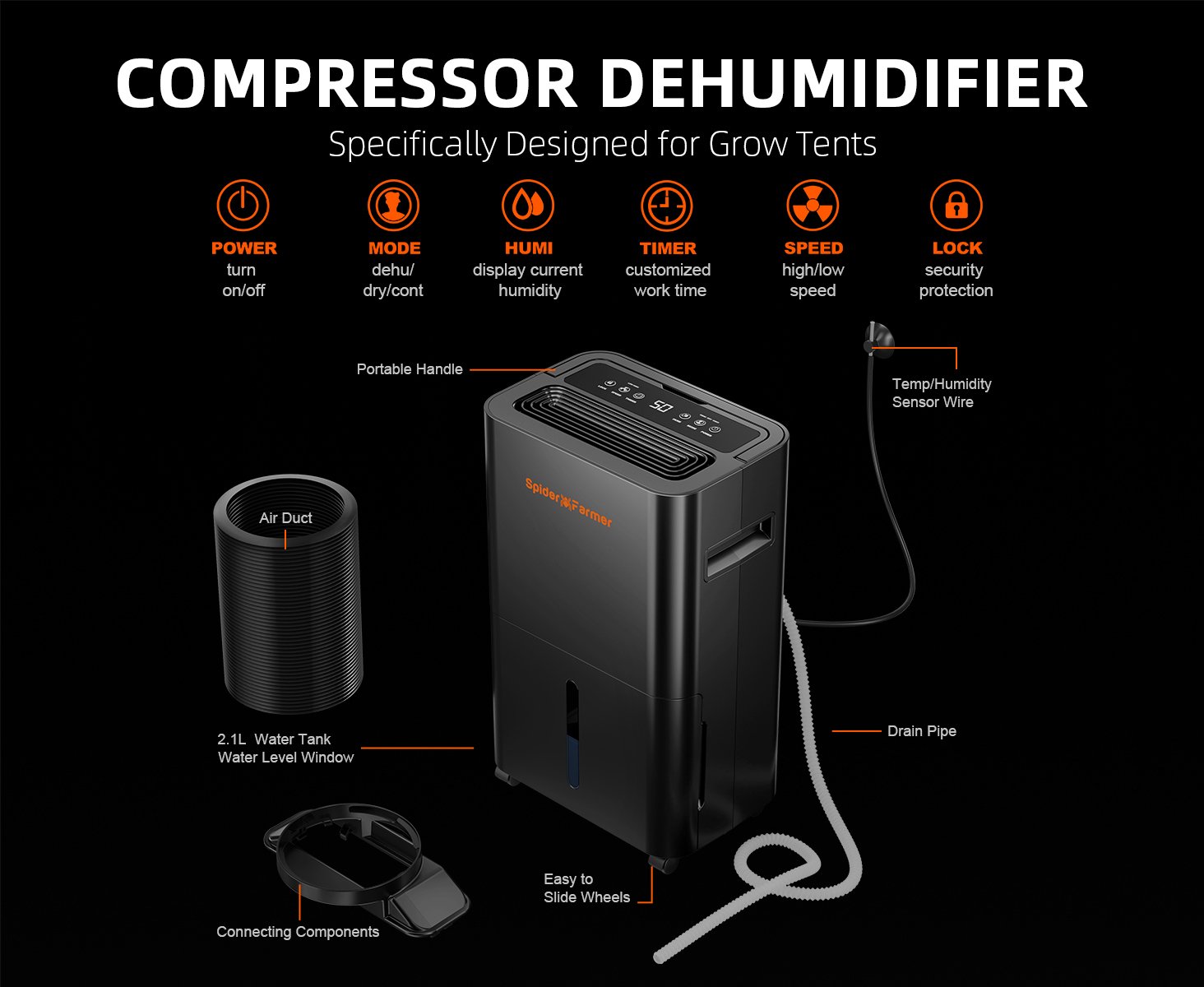
Quality always matters. The Spider Farmer 32 Pint dehumidifier stands out due to its reliable and sturdy components, ensuring long-term performance for your crops. You can expect the following materials: 

  • High-quality compressor: Equipped with overload protection and resistance to extreme temperatures, the high-quality compressor ensures safe and efficient operation in all conditions.
  • Powerful airflow: The turbofan, driven by a pure copper motor, delivers strong and quick dehumidification, so the moisture is rapidly removed and humidity levels are maintained.
  • Enhanced coils: Internal threaded copper pipes increase the surface area for faster condensation and improved dehumidification, ensuring your grow tent stays at the optimal humidity level.
Spider Farmer Dehumidifier for Plants

Spider Farmer Dehumidifier for Plants

Smart Control, Smart Grow

The Spider Farmer 32 Pint Dehumidifier for Grow Tent is designed with smart features that make it incredibly user-friendly and efficient, including: 

  • Auto timer
  • Intelligent defrost system
  • Continuous drainage
  • Smart humidity control

Interested in our latest launch? Add it to your cart for further use!
What Is the Optimal Humidity Level for Your Grow Tent 

Keeping the optimal relative humidity in your grow tent contributes to an ideal VPD, which directly affects the rate of transpiration and water loss in plants. Based on our tests and large amounts of user experience, the optimal humidity levels vary by plant growth stage:

  • Seedling and Clone Stage: 70-75% humidity.
  • Vegetative Stage: Gradually lower to 50-70%.
  • Flowering Stage: Reduce to 40-50% and maintain until harvest.

For more details on adjusting humidity levels, whether using a humidifier/dehumidifier or adopting natural approaches, check our articles on how to lower humidity and how to increase humidity in a grow tent

Note: We also offer plant humidifiers for purchase to meet all your grow room needs!

Suggestions on Temperature and Humidity for Low-Temperature Drying Weed

By the end of the post, we'll give you some suggestions for low-temperature drying of weed, in terms of different environment.

Ideal Temperature for Low-Temperature Drying Weed

The ideal temperature range for drying mature weed is between 15°C and 21°C (59°F to 70°F). This range is optimal because:

  • Preservation of Terpenes and Cannabinoids: Higher temperatures can degrade these compounds, leading to a less potent and less flavorful final product.
  • Prevention of Mold: Lower temperatures slow down the drying process, which can increase the risk of mold growth.

How to Maintain the Temperature when Drying?

To maintain a consistent temperature within this range:
  • Use Air Conditioning: Air conditioners can help regulate the temperature in the drying room.
  • Monitor Regularly: Use thermo-hygrometers to track temperature levels and ensure they remain within the desired range.
  • Avoid Direct Airflow: You can use inline fans to ensure proper airflow, but should not blow directly on the plants, as this can cause uneven drying.

Humidity Suggestions for Low-Temperature Drying Weed

The ideal relative humidity for drying mature weed is between 45% and 55%. This range is recommended because:
  • Prevention of Mold: High humidity levels (above 60%) can lead to mold growth, which is detrimental to the quality and safety of the weed.
  • Avoiding Over-Drying: Low humidity levels (below 40%) can cause the weed to dry too quickly, leading to a loss of terpenes and cannabinoids.

How to Maintain the Humidity when Drying?

To maintain the ideal humidity levels:
  • Use Dehumidifiers: These devices remove excess moisture from the air, especially during the initial 24 to 48 hours when the plants release the most moisture.
  • Use Humidifiers: In very dry climates, humidifiers may be necessary to raise the humidity to the desired range.
  • Monitor Regularly: Place humidity gauges in various locations around the drying room to ensure uniform humidity levels.

Precautions and Considerations for the Number of Dry Days

Precautions

  • Avoid High Humidity: Regularly check for signs of mold, especially during the first week of drying. If mold is detected, remove the affected buds and reduce humidity.
  • Avoid Direct Sunlight: Keep the drying room dark or use low-intensity lights to prevent the degradation of terpenes and cannabinoids.
  • Proper Airflow: Ensure proper ventilation to prevent stagnant air, which can lead to temperature and humidity fluctuations.

Considerations for the Number of Dry Days

  • Initial Moisture Content: The drying time can vary based on the initial moisture content of the buds. Typically, the drying process takes between five days to two weeks.
  • Wet vs. Dry Trimming: Wet trimming can speed up the drying process by removing excess moisture, while dry trimming can help prevent over-drying in very dry climates.
  • Environmental Control: Consistent temperature and humidity levels are crucial for even drying. Fluctuations can lead to uneven drying and potential quality issues.

FAQs about Dehumidifiers for Grow Tent

  1. Can I put a dehumidifier in my grow tent?

Theoretically, yes, but in reality? Not suggested, particularly when you can have a dehumidifier with an air duct connection produced by Spider Farmer. When putting the dehumidifier in the tent, it consumes the space, for starters. Then, when it’s working, it generates heat, noise, and light from the screen. Any of these can mingle with the indoor growing conditions,s and we’re sure that’s not what you want. 

  1. Where should a dehumidifier be placed in a grow room?

The best place to position a dehumidifier is not in the grow room but the outside of it. By placing the dehumidifier outside and connecting it to the grow room via an air duct, such as with the Spider Farmer dehumidifier, you can effectively control humidity without compromising the growing environment. 

  1. Can I use a dehumidifier to dry herbs?

Yes, but we don’t encourage doing that. Although a dehumidifier can speed up the drying process, this approach can diminish your plant flavor, potency, and overall performance of the buds. The proper method is to dry herbs slowly at a low temperature. 

author-avatar

About Ciki

Ciki has been navigating the digital world of SEO for over 4 years, applying her expertise originally in the software sector before turning her attention to indoor gardening. Merging her tech-savvy background with a passion for nature, Ciki offers a unique perspective on gardening, blending modern techniques with time-honored traditions.

Leave a Reply

Your email address will not be published. Required fields are marked *