



Why Are Some Plants with Purple and Green Leaves
Have you ever wondered why there are such weird plant leaves? Plants with purple and green leaves showcase this unique coloration for several reasons, primarily driven by their adaptation to specific environmental conditions and evolutionary advantages, including the following key factors:
- Sunlight absorption
- Temperature regulation
- Nutrient availability
- Pest and herbivore deterrence
- Camouflage and attraction
- Genetic variation
- Aesthetic appeal
Purple Shamrock (Oxalis triangularis)
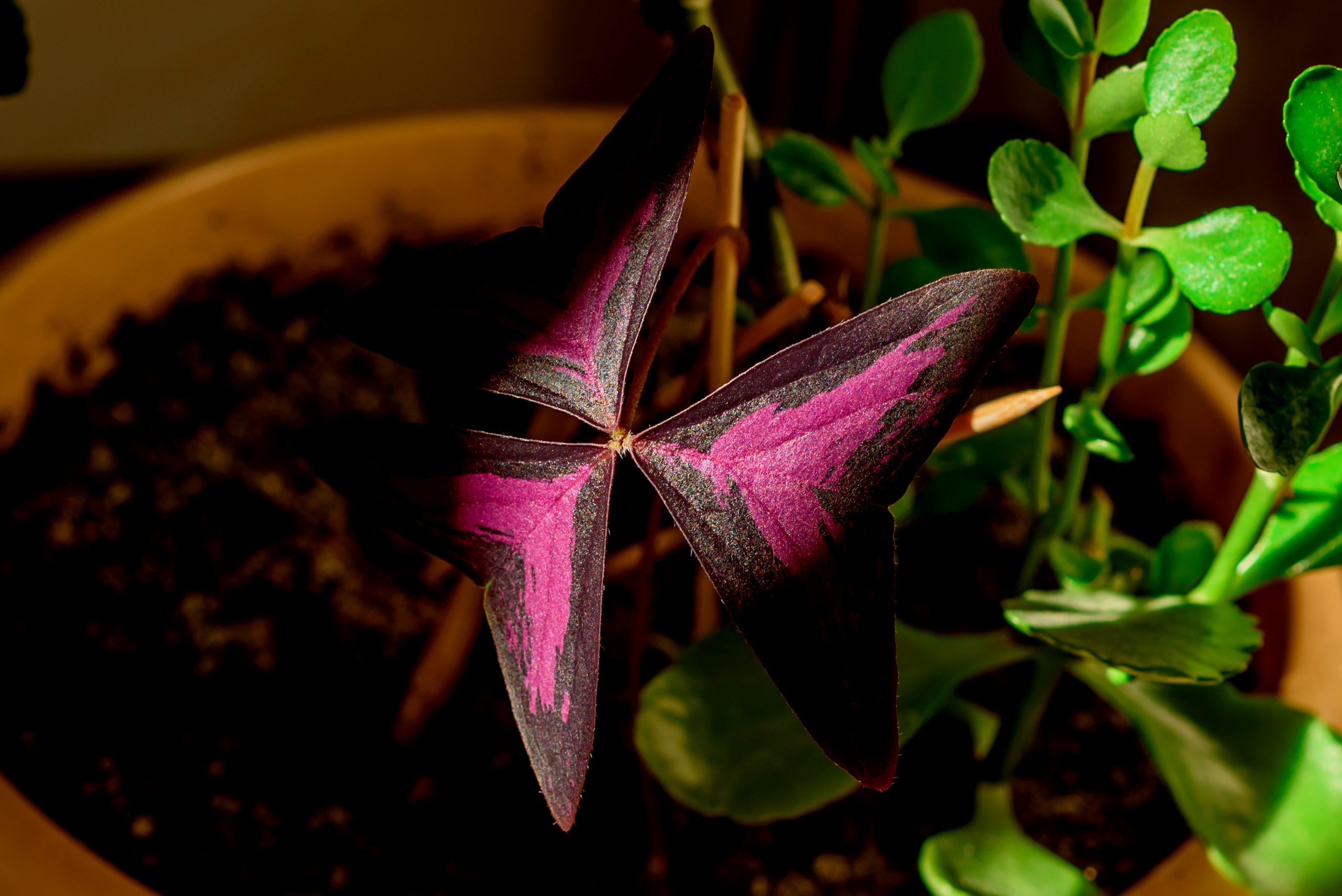
Purple and Green Leaf Plant - Purple Shamrock
The Purple Shamrock is a unique and attractive plant that is well known for its distinctive, triangular-shaped leaves, which can be deep purple or maroon in color. The leaves fold up at night, resembling the shape of a traditional shamrock, hence its name.
One unique feature of the Purple Shamrock is its tendency to go dormant in the winter. During this period, the leaves may die back, but the plant will regrow when conditions become more favorable in the spring. Impressive, isn’t it?
USDA Zone: 8 to 11
Persian Shield (Strobilanthes dyerianus)
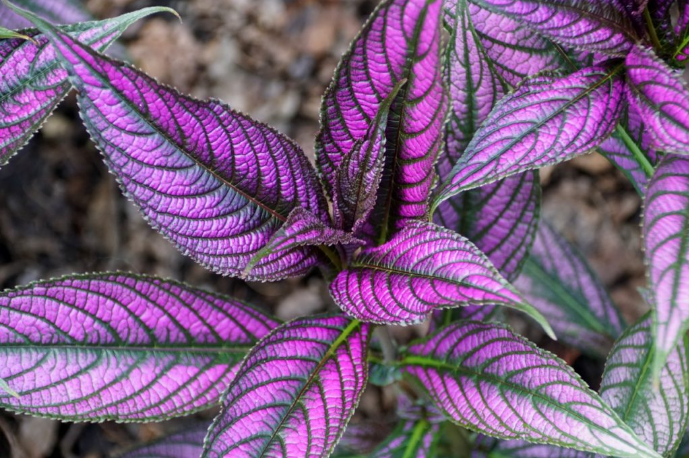
Purple and Green Leaf Plant - Persian Shield
The Persian Shield is a stunning and vibrant tropical plant famous for its striking foliage. In terms of the leaves, the Persian Shield is prized for its large, lance-shaped leaves that are typically iridescent purple or silver with green veins. The combination of these colors creates a captivating and eye-catching appearance. When grown under the ideal temp and humidity level, it can produce small, tubular, violet-blue flowers, although the primary attraction is its foliage.
USDA Zone: 10 and 11
Purple Velvet Plant (Gynura aurantiaca)
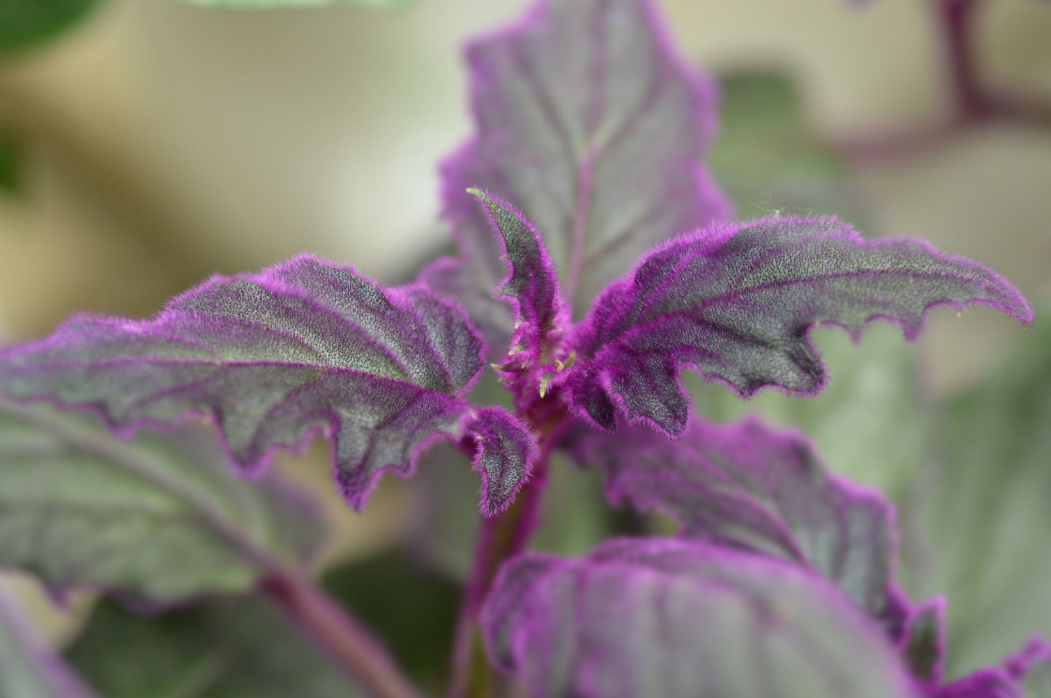
Purple and Green Leaf Plant - Purple Velvet Plant
The Purple Velvet Plant is another houseplant with purple and green leaves. Its striking feature is its lush, velvety leaves that display a vibrant purple hue on the underside, giving it the appearance of rich velvet. Furthermore, the leaves are soft to the touch, further enhancing their velvety appearance.
When provided with the right conditions, it can produce small, bright orange flowers, though the primary attraction is its foliage.
USDA Zone: 6 to 9
Purple Heart Plant (Tradescantia pallida)
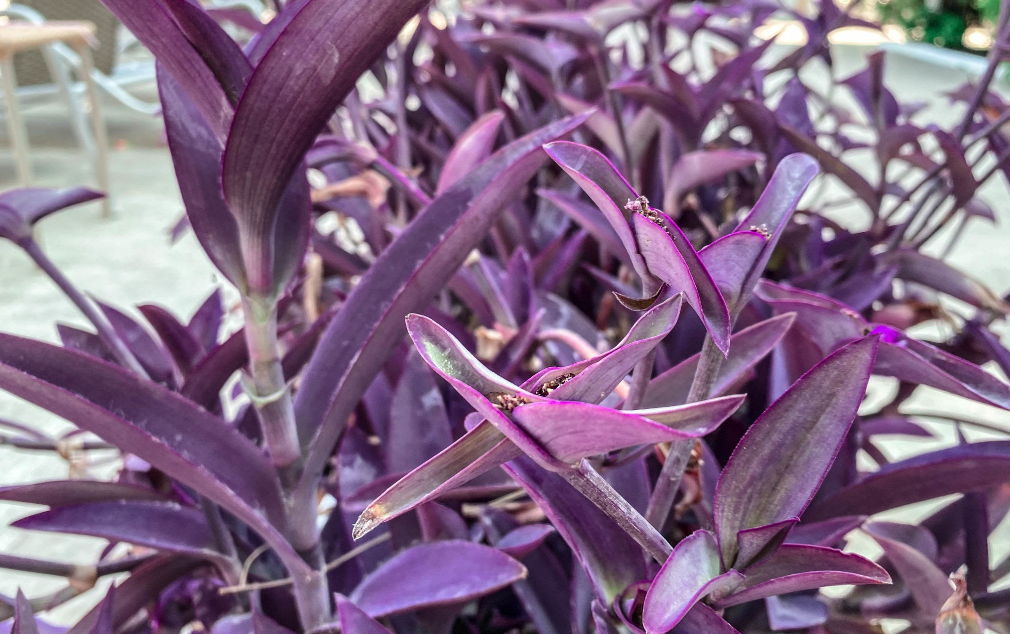
Purple and Green Leaf Plant - Purple Heart Plant
Purple Heart Plant is a remarkable and eye-catching succulent-like plant renowned for its elongated, lance-shaped leaves that are typically a deep, rich purple color, giving the plant its distinctive appearance. In addition to its foliage, it can produce small, inconspicuous pink or violet flowers.
USDA Zone: 7 to 11
Wandering Jew (Tradescantia zebrina)
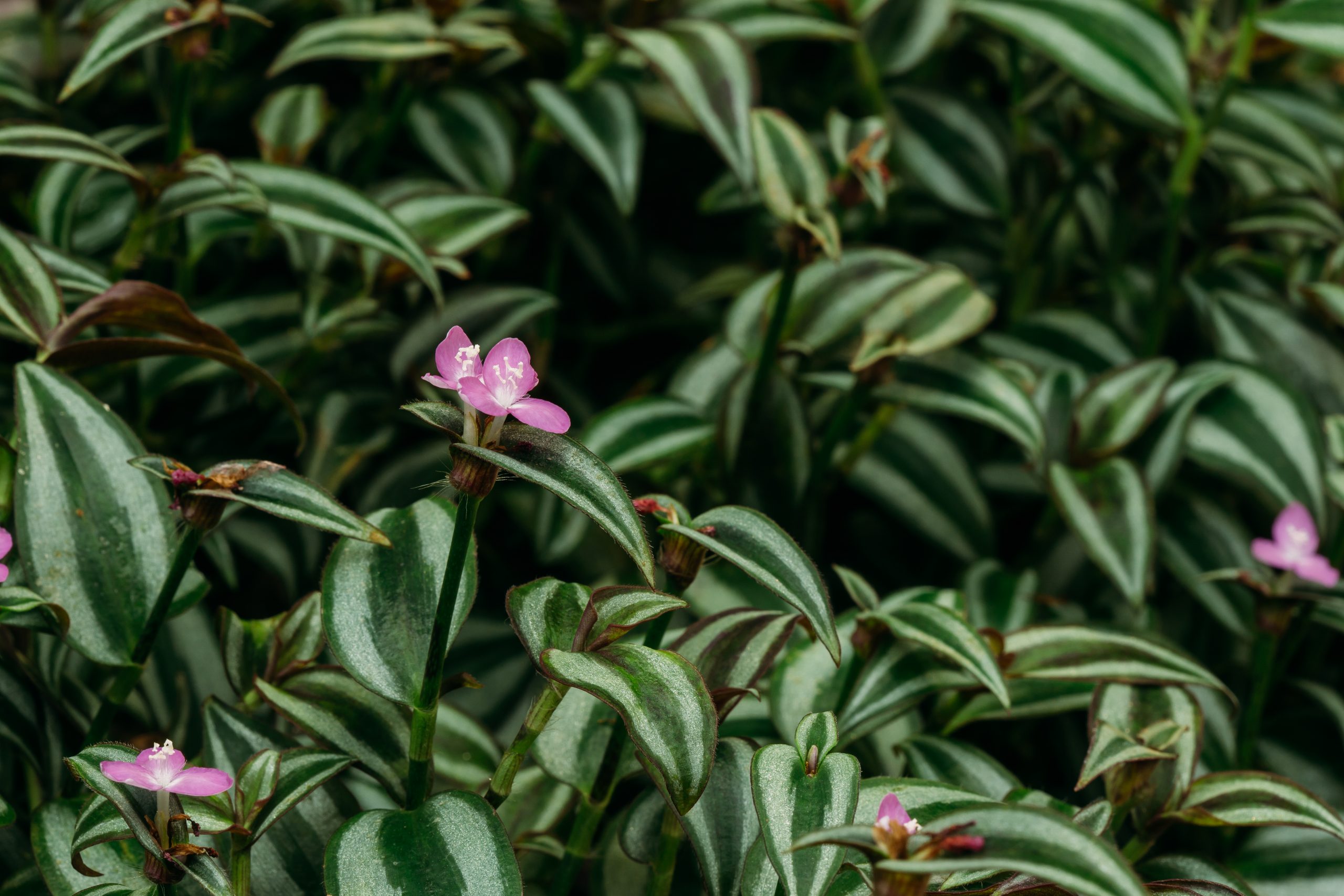
Purple and Green Leaf Plant - Wandering Jew
Wandering Jew, botanically named Tradescantia zebrina, is a popular trailing houseplant with green and purple leaves. It features lance-shaped leaves that are primarily green with distinct stripes of purple.
USDA Zone: 8 to 12
Rose-Painted Calathea (Calathea roseopicta)
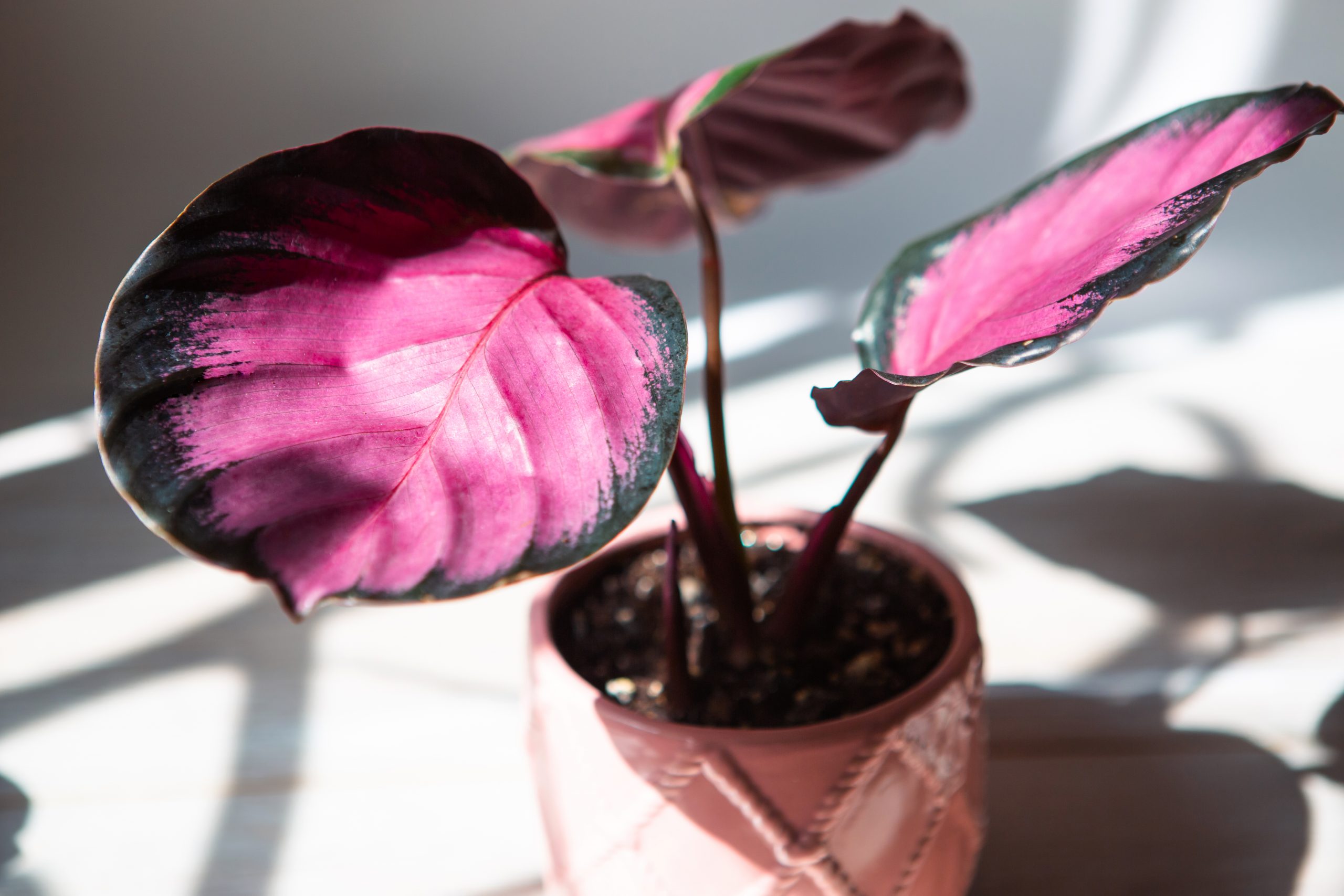
Purple and Green Leaf Plant - Rose-Painted Calathea
The Rose-Painted Calathea, scientifically known as Calathea roseopicta, is appreciated for its beautifully patterned leaves. Its upper side showcases dark green leaves with prominent veins and a lively pink center, while on the flip side, the leaves exhibit a deep purple hue that becomes more prominent in the evening as they fold inward. Maintaining constant moisture is crucial for this purple-leafed plant, so you may apply a plant humidifier when necessary.
USDA Zone: 10 and 11
Echeveria ‘Purple Pearl’
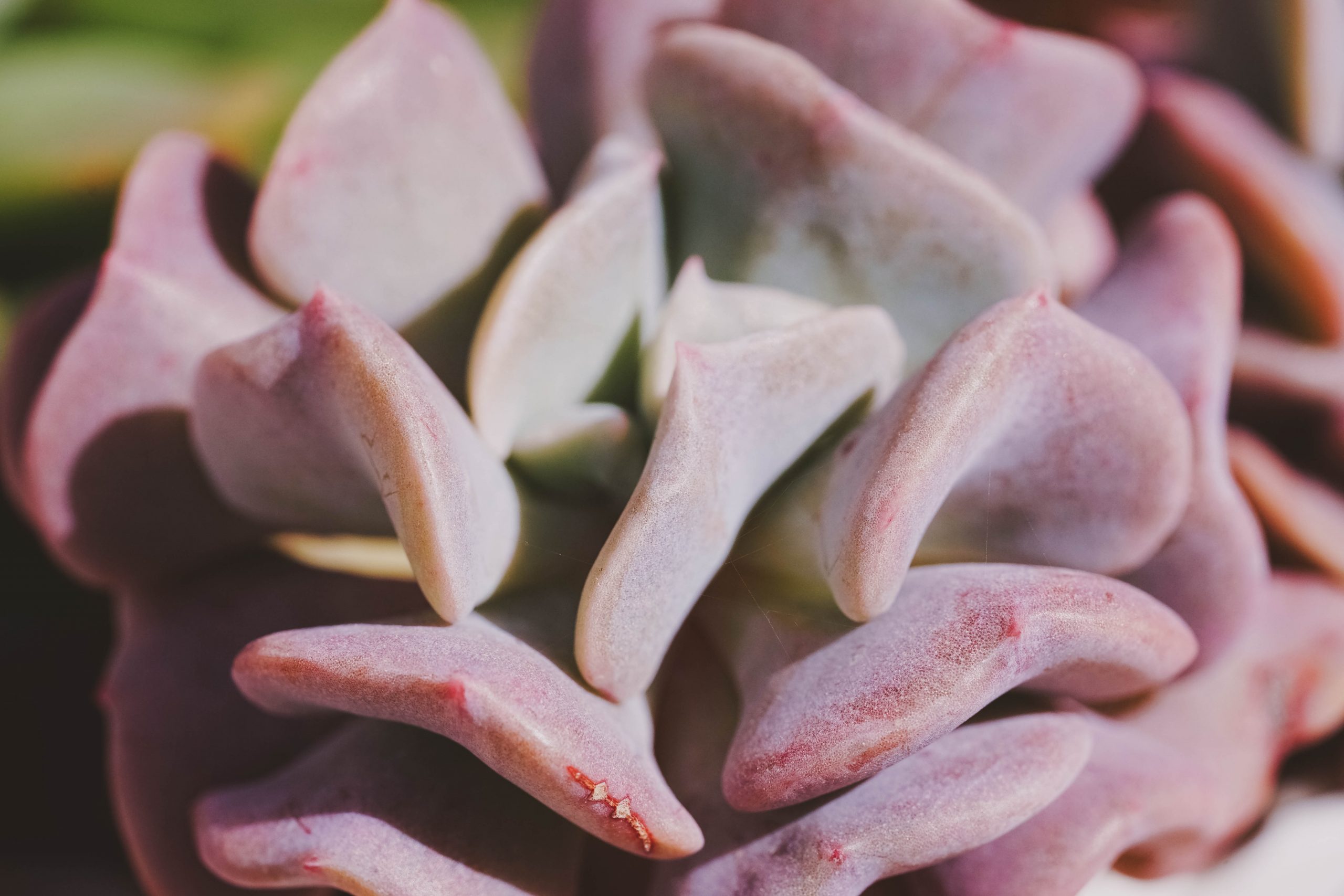
Purple and Green Leaf Plant - Echeveria 'Purple Pearl'
Among all famous plants with purple leaves, Echeveria 'Purple Pearl’ is one special succulent plant that belongs to the Echeveria genus. It is highly sought after for its captivating appearance and unique rosette-shaped foliage. The leaves are often described as having a pearlescent quality, which adds to their allure. In addition to its foliage, this succulent can produce tall, slender flower stalks with bright coral-colored, bell-shaped flowers.
USDA Zone: 9 to 12
Iron Cross (Oxalis tetraphylla)
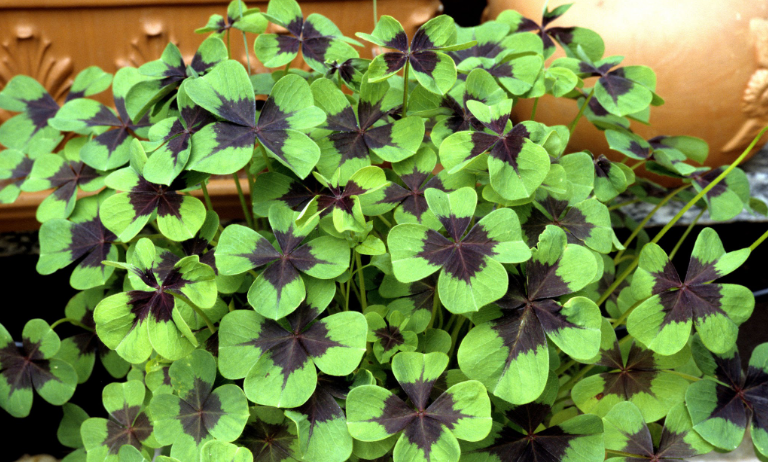
Purple and Green Leaf Plant - Iron Cross
The Iron Cross typically has small, clover-like leaves that are divided into four heart-shaped leaflets, as you can tell from the image. Each leaflet usually displays a deep green color with a prominent dark purple or maroon marking in the shape of a cross.
USDA Zone: 7 to 10
Painted Nettles (Coleus scutellarioides)
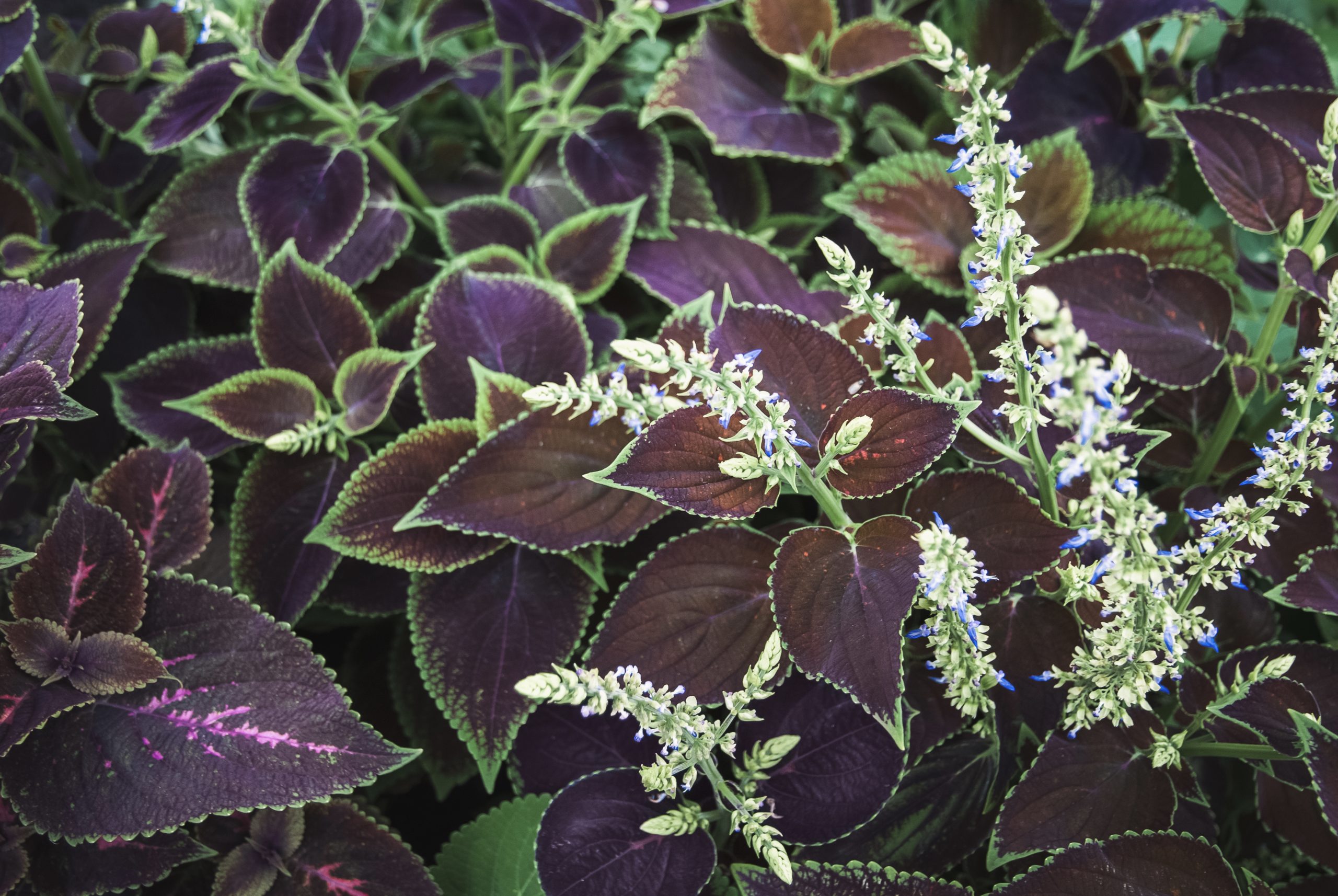
Purple and Green Leaf Plant - Painted Nettles
Painted nettles are available in an extensive array of varieties, making their options virtually limitless. While they do produce flowers, their true allure lies in their velvety foliage. The leaves are not only pleasing to the touch but also a visual delight due to their diverse variegated colors and intricate patterns.
USDA Zone: 5 to 10
Purple Basil (Ocimum basilicum)
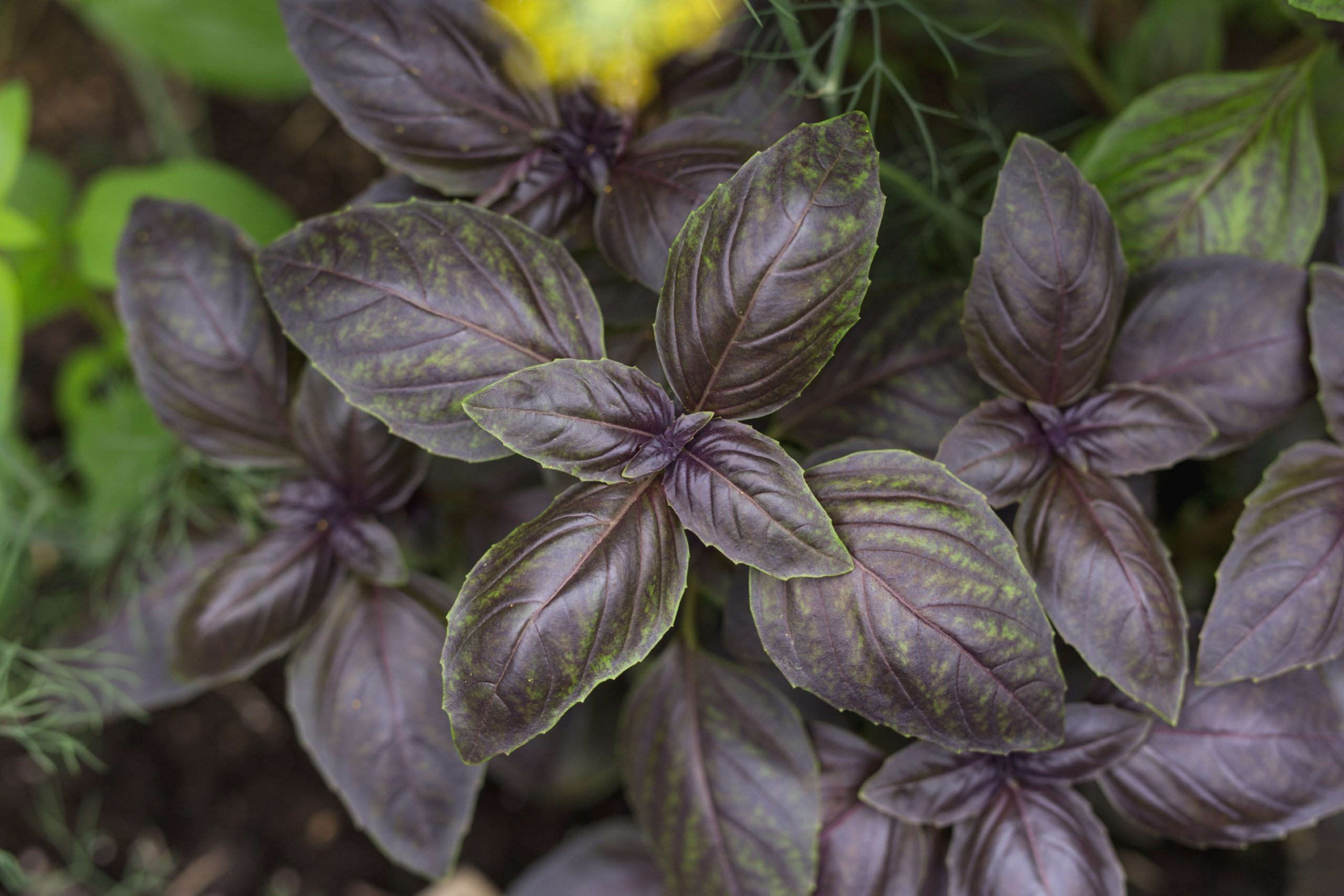
Purple and Green Leaf Plant - Purple Basil
Known for its vibrant purple or reddish-purple leaves, Purple Basil is a culinary herb that is prized for both its decorative appeal and its aromatic flavor. The leaves of this plant can vary in shades of purple, from deep burgundy to bright lavender.
USDA Zone: 5
FAQs about Plant with Purple and Green Leaves
- What is the name of the plant that has purple and green leaves?
The name of the plant with purple and green leaves can vary depending on the specific species. Here is a list of some plants known for their purple and green foliage:
- Purple Shamrock (Oxalis triangularis)
- Persian Shield (Strobilanthes dyerianus)
- Purple Velvet Plant (Gynura aurantiaca)
- Purple Heart Plant (Tradescantia pallida)
- Wandering Jew (Tradescantia zebrina)
- Calathea roseopicta (Rose-Painted Calathea)
- Echeveria ‘Purple Pearl’
- Iron Cross
- Painted Nettles
- Purple Basil (Ocimum basilicum)
- What houseplant has purple and green striped leaves?
Houseplants with purple and green striped leaves are often referred to as "Calathea" plants. Calathea species, such as Calathea ornata (also known as the Pinstripe Plant) and Calathea roseopicta (the Rose-Painted Calathea), are popular choices known for their striking striped foliage.
- What is a variegated purple and green plant?
A variegated purple and green plant is one that displays a mix of purple and green colors in its leaves, creating a visually appealing pattern. These plants often have sections of purple, green, and sometimes even white or pink in their foliage. To name one example, the Persian Shield (Strobilanthes dyerianus) is a well-known variegated plant with vibrant purple and green leaves.
- What are the dark green leaves with purple underneath?
Plants with dark green leaves and purple underneath are commonly found in the genus Tradescantia, particularly the Tradescantia zebrina, commonly known as the Wandering Jew. The upper side of the leaves is typically green, while the undersides display a rich purple color, adding to their beauty and intrigue.
5. What is a fuzzy purple and green houseplant?
A fuzzy purple and green house plant is likely a variety of African Violet (Saintpaulia), known for its soft, velvety leaves and vibrant flowers that often come in shades of purple, blue, or white, with green, fuzzy foliage. Another possibility is the Gynura, commonly referred to as the "Purple Passion Plant," which features fuzzy, green leaves with striking purple undersides and sometimes purple hairs on the leaves. Both plants are popular for their unique textures and colorful appearances, making them attractive additions to indoor spaces.
6. What climbing plant has green and purple leaves?
A climbing plant that features both green and purple leaves is the Purple Heart Plant. This hardy perennial is known for its striking foliage, which showcases vibrant purple leaves on top and green stems, often creating a beautiful contrast. Another example is the Variegated English Ivy (Hedera helix), which can display green leaves with purple or reddish undertones, especially when exposed to certain light conditions. Both of these plants are popular choices for adding visual interest to vertical spaces, trellises, and hanging baskets.