-1.png)


A self-watering pot is a container for indoor or outdoor plants that includes a built-in water reservoir and a wicking or capillary system to deliver moisture to the soil.

What is a Self-Watering Planter?
The water is poured into and stored in a separate compartment at the bottom or side of the pot, and then drawn upward through a wick, fabric strip, or porous material into the root zone. This keeps the soil consistently moist without becoming waterlogged.
This design helps prevent both underwatering and overwatering plants, reducing how often you need to water, and is especially useful for watering plants while you’re away or for self-watering plants that prefer steady humidity around their roots.
Differentiated from top-watering methods, self-watering pots move moisture upward into the soil by combining a hidden water reservoir with a wicking or capillary system.

How Do Self-Watering Planters Work?
Most designs have two main zones: a lower chamber that stores water and an upper growing container with soil. It uses a wicking element, such as a fabric strip, soil column, coir rope, or porous material, to connect the reservoir to the root zone. When the soil dries slightly, capillary action (the same force that makes a paper towel soak up a spill) pulls water up through tiny spaces and keeps the medium consistently moist.
Take Spider Farmer’s self-watering system as an example. It’s a gravity-fed, no-power setup that uses a central reservoir and wicking bases to deliver moisture to plants automatically through capillary action.

Capillary Action of Self-Watering Pots
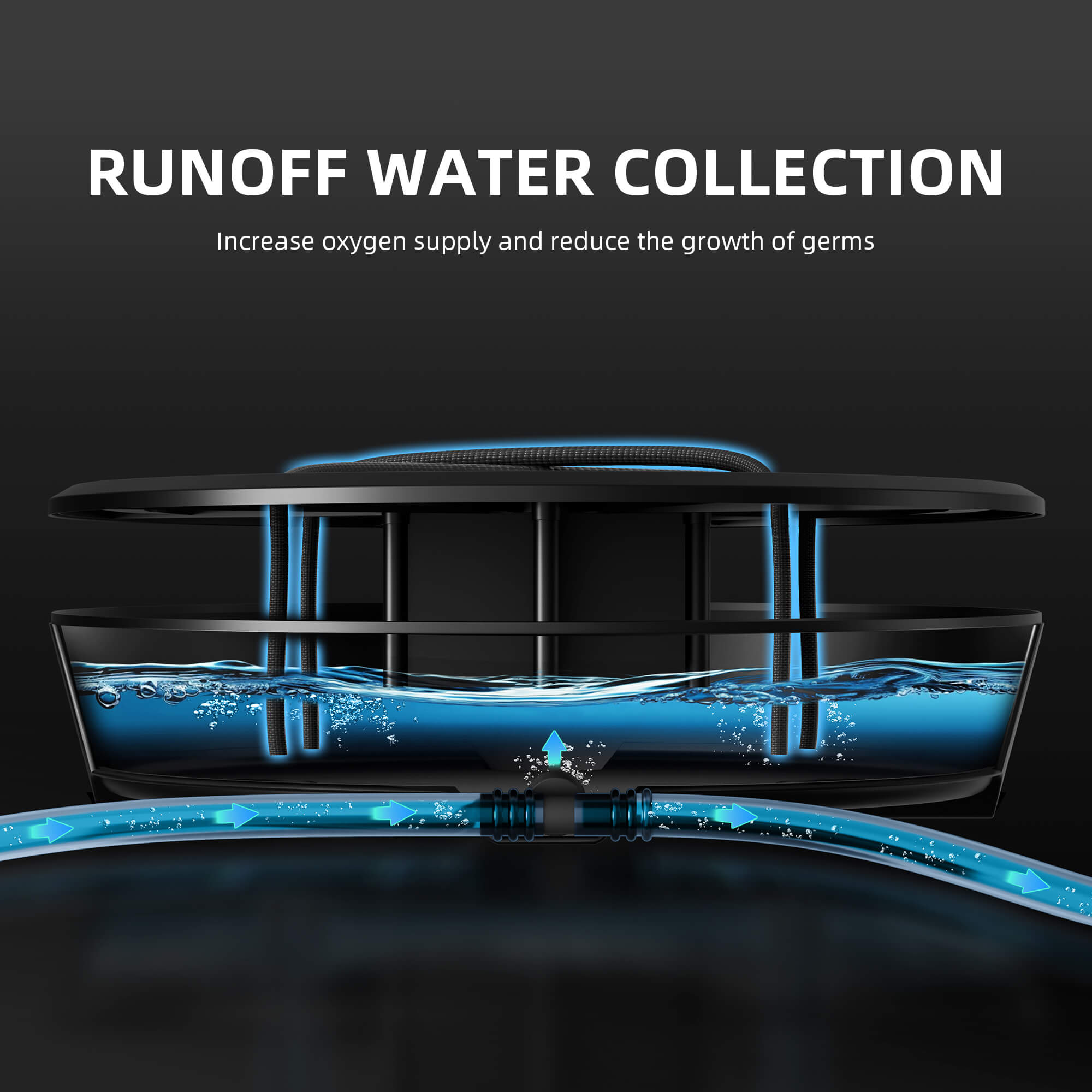
In this system, water is stored in a foldable tank and flows into lower basins under each pot or grow bag. From there, cotton ropes or wicks run from the water-filled basin up into the growing medium. When the soil dries, these wicks pull water upward and keep the root zone consistently moist without flooding. You can adjust the amount of water each plant receives by changing the number of wicks. If it works together with automated drip irrigation and soil sensors, it can also smartly trigger watering when moisture drops below setpoints.

Spider Farmer 4-Pack Gravity-Fed Silent Self-Watering System Kits for Indoor Grow Tents & Greenhouses
- 𝐇𝐀𝐒𝐒𝐋𝐄-𝐅𝐑𝐄𝐄 𝐀𝐔𝐓𝐎 𝐖𝐀𝐓𝐄𝐑𝐈𝐍𝐆 𝐒𝐘𝐒𝐓𝐄𝐌: Spider Farmer self-watering system uses gravity to automatically feed water from a generous 13-gallon reservoir directly to each pot base, ensures your plants stay perfectly hydrated—no electricity needed, no daily checks required. Say goodbye to manual watering with this system that keeps your plants hydrated effortlessly
- 𝐏𝐑𝐄𝐂𝐈𝐒𝐄 𝐌𝐎𝐈𝐒𝐓𝐔𝐑𝐄 𝐂𝐎𝐍𝐓𝐑𝐎𝐋: Using wick lines, plants absorb only the water they need, ensuring a balanced watering system that prevents over or under-watering. This self-watering system is designed to keep your plants healthy with the ideal moisture levels
- 𝐋𝐎𝐍𝐆-𝐋𝐀𝐒𝐓𝐈𝐍𝐆 𝐖𝐀𝐓𝐄𝐑 𝐒𝐔𝐏𝐏𝐋𝐘: Fill the 13-gallon reservoir once, and enjoy up to 2 weeks of automatic watering! This 4-pack self-watering system will keep your plants happy and lush, even when you’re on vacation
- 𝐀𝐃𝐉𝐔𝐒𝐓𝐀𝐁𝐋𝐄 𝐖𝐈𝐂𝐊 𝐋𝐈𝐍𝐄 𝐏𝐎𝐒𝐈𝐓𝐈𝐎𝐍𝐒: Designed to fit your growing needs, each fabric pot base features three sets of wick positions to fit different pot sizes. You can seamlessly switch between 1-2, 3, and 5-7 gallon grow bags, providing a versatile self-watering pot base for various plant needs and pot sizes
- 𝐀𝐋𝐋-𝐈𝐍-𝐎𝐍𝐄 𝐒𝐄𝐋𝐅-𝐖𝐀𝐓𝐄𝐑𝐈𝐍𝐆 𝐊𝐈𝐓: Get everything you need in one powerful package: four self-watering bases, a 13-gallon water reservoir, five 5-gallon grow bags, wick lines, shut-off value box and water tubes. Just set it up and watch your plants thrive!
- 𝐈𝐃𝐄𝐀𝐋 𝐅𝐎𝐑 𝟒𝐱𝟒 & 𝟓𝐱𝟓𝐅𝐓 𝐆𝐑𝐎𝐖 𝐓𝐄𝐍𝐓𝐒: Each base features a 15.6-inch diameter, perfectly designed to fit 4x4 and 5x5ft grow tents. The Spider Farmer 4-Pot Self-Watering System ensures efficient hydration for your plants, reducing manual watering and optimizing growth. Grow smarter, not harder!
- Can support 4L of water per plant per week.
- Keeps 4 plants watered for 3 weeks
- Silent hydration for your indoor garden — keeps your plants nourished without disturbing your peace.
- Tips:
- For best results, lay the Self-Watering Fabric Pot Base, Shut-off Valve Box, and tubes flat on the ground, and always keep the folding bucket filled with water
- It is recommended to clean the basin every two weeks to prevent root clogging
- Recommended tent sizes: 120cm x 120cm/ 150cm x 150cm Grow Tent
- Self-watering pots work best once the roots are well-developed. Seedlings have shallow roots that may not reach the moist soil, so it's best to wait until they grow longer and stronger.
- DIY Self-Watering System:Customize your watering needs by adjusting the number of wicks—more wicks, more water. Simple and flexible for every plant.
- Package contents: 4x Self-watering Fabric Pot Base 1x 50L Folding Bucket 5 X 5 Gallon Grow Bag 1 X Silicone Tube (4M) 1X Shut-Off Valve Box 1X User Manual (Check More)


Spider Farmer Smart Irrigation Starter Kit | Drip Irrigation Set +S-Station Smart Plug Controller+10-Port GGS Pro Adapter+3 Pcs GGS 3-in-1 Soil Sensor Pro
Key Features of Self-Watering Pots
- Passive, no-power Wicking Irrigation: The system uses a gravity-fed reservoir and cotton wicks (or similar capillary elements) to move water from a lower tray into the growing medium, so it works without electricity or pumps.
- Shared Reservoir for Multiple Plants: A single foldable water tank (commonly around 30–50 L in multi-plant kits) supplies several pots or grow bags at once, reducing how often you need to refill compared with individual self-watering pots.
- Adjustable Moisture Delivery: You can change the number of wicks per plant to fine-tune how much water each root zone receives, adapting to plant size, species, and environmental conditions.
- Compatible with Fabric Grow Bags and Trays: The setup is designed for use with Spider Farmer’s grow bags and water trays in grow tents or indoor grow areas, making it easy to scale from a few plants to a small indoor garden.
- Integrates with GGS Smart Ecosystem: While the basic self-watering bases are passive, they can be combined with Spider Farmer’s GGS controllers, soil sensors, and automated drip irrigation kits for more advanced, sensor-driven irrigation and climate control.
Main Benefits
- More Consistent Soil Moisture: Capillary action keeps the root zone evenly moist, helping avoid the dry–wet swings common with manual top-watering and supporting steadier growth.
- Less Frequent Watering Work: The large central reservoir and passive wicking mean you refill far less often than with standard pots or small self-watering containers, which is especially helpful for busy indoor growers or when traveling.
- Water Efficiency: By delivering water directly to the root zone and minimizing evaporation and runoff, the system can significantly reduce overall water use compared with traditional top-watering.
- Scalable and Flexible for Indoor Setups: The modular design supports multiple plants in tents, balconies, or small rooms and can be expanded or adjusted as your indoor garden grows.
- Pathway to Automation: Starting with passive self-watering, you can later add soil-moisture sensors and automated pumps within the GGS ecosystem to move toward fully controlled, data-driven irrigation without replacing the entire setup.
How Do You Use a Self-Watering Pot?
It’s straightforward to use Spider Farmer’s self-watering planter. Please refer to the basic setup and use steps:

How Do You Use a Self-Watering Pot?
- Assemble the components
- Place the foldable water tank (reservoir) on a stable, level surface near your plants.
- Set the water trays or bases under each grow bag/pot so they sit flat and can be filled from the tank via the provided tubing or distribution lines.
- Connect the reservoir to the trays
- Attach the supply line from the tank to the inlet on each tray or manifold, following the kit’s diagram so water can flow by gravity into each base.
- If your kit includes a float valve or auto-fill box, install it so the trays stay at a consistent water level as the tank drains.
- Install the wicks
- Thread the cotton wicks (or wicking ropes) from the water-filled tray up into the bottom of each grow bag or pot, ensuring good contact with the growing medium.
- Adjust the number of wicks per plant: more wicks for larger, thirstier plants; fewer for smaller or slower-growing ones.
- Fill the reservoir
- Open the tank and fill it with clean water until it reaches the indicated level; the water will then flow into the trays and be drawn up by the wicks.
- Close the tank securely to reduce evaporation and contamination.
- Monitor and maintain
- Check the water level in the reservoir every few days and refill as needed; frequency depends on plant size, temperature, and humidity.
- Periodically inspect the trays to ensure they’re not overflowing and that wicks remain in good contact with moist soil.
- If you notice overly wet soil or algae, reduce the number of wicks, improve airflow, or clean the tank and trays more often.
Notably, for advanced users, Spider Farmer’s GGS ecosystem enables you to add soil sensors and automated pumps so the reservoir can be refilled or topped up automatically.